Everything You Need to Know About Kasimir Oyelaran's Car Radio Drum Machine
Six dead dashboards, one generator and a kick drum tuned 1.6 hertz off the mains. Here is how a workshop in Mushin made the sound of the year.
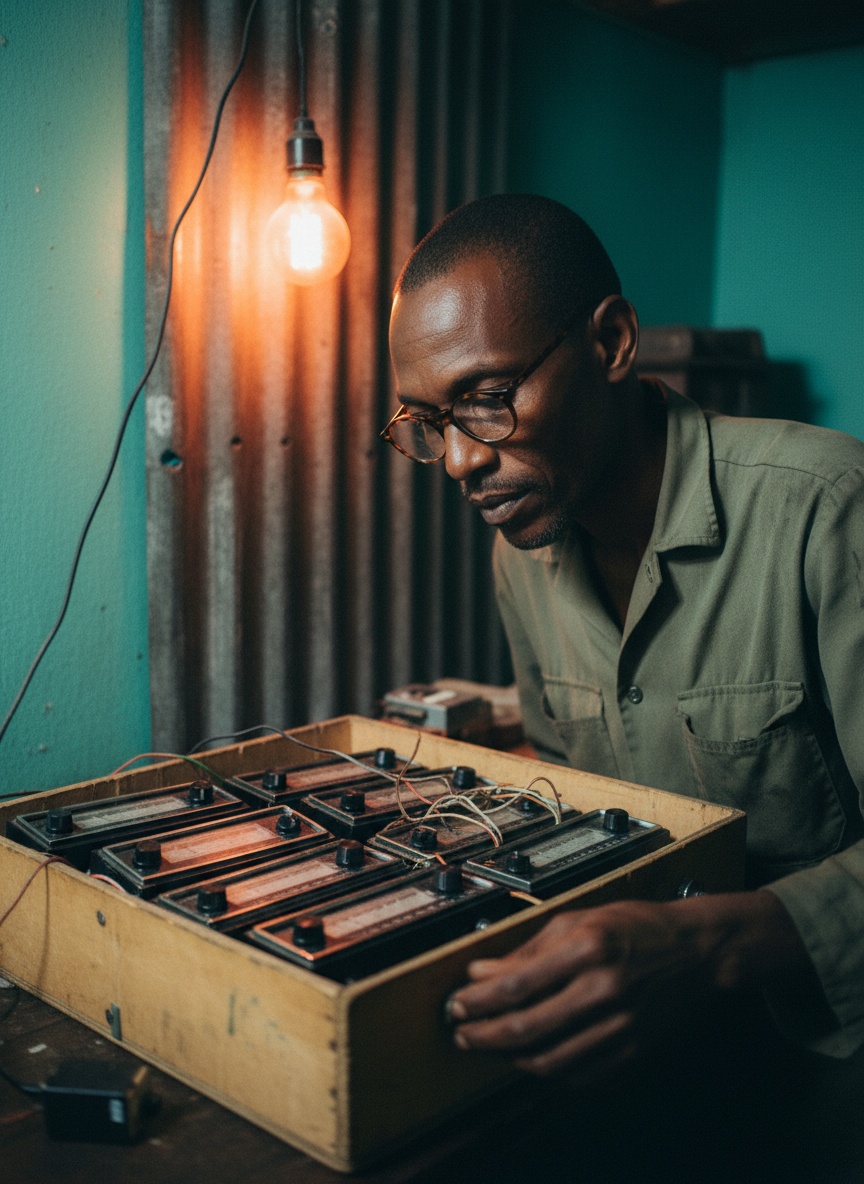
The first thing you hear is the hum. Kasimir Oyelaran flips a switch on a plywood box, and the room fills with a low, wet throb, like a very large animal turning over in its sleep. He nods at it. That is the kick drum.
Here is the box. Six car radios, screwed into a frame of marine ply. Every one was pulled from a dashboard in the scrapyards around Oshodi. Two come from boxy late-eighties saloons with orange needle dials. Three come from minibus cabs, the ones with the cracked clock and the burn mark where a driver rested a cigarette. The sixth is from a hearse. He will not say which hearse.
Each radio is one voice. He strips the tuner and keeps the variable capacitor, the chunky silver fan that moves when you turn the dial. Wired into a small oscillator, that fan becomes a pitch knob. Turn it a quarter inch and the note slides. The cassette motors in the three deck models run the clock, and their slight wobble is why nothing on the machine ever lands exactly on the grid.
Now the 98. A generator next door puts 50 hertz of mains hum into everything he owns. Most producers fight that hum. Kasimir tunes his kick to 51.6 hertz and lets the two notes rub against each other. They beat 1.63 times a second. Multiply by sixty and you get 98 beats per minute. The tempo is not set by a clock. It is set by two tones that cannot agree.
That is why the kick feels so heavy. It never fully starts and never fully stops. It leans. On a decent sound system the air in front of the bass bin moves like a curtain in a doorway.
The other tempos come from the other radios. The hearse unit runs at 86, slow and dignified, and is used for intros. The minibus decks sit at 104 and 112, where the hi-hat is a tape motor hitting a loose screw. He found the screw by accident in March. He has not tightened it since.
Want to hear it? Four tracks have gone out so far, all recorded in a single afternoon with the shutters closed, because the generator gets louder when the street is quiet. Start with the one that opens on the hum alone for eleven seconds. Then the snare comes in, a dashboard glove box slammed shut, and you will understand everything.
Kasimir says he has been offered a proper drum machine twice. He thanked both people and kept the radios. The hearse one, he says, has the best low end. Nobody asks why.